
Here’s a little tip for the start of another working year: if you want to make much sense of the economy, you need a good feel for arithmetic.
Thanks to our obsession with economic growth, we’re almost always focusing on the change in economic indicators like gross domestic product and its components, such as consumer spending, business investment, imports and exports. (And the figures we look at are usually “in real terms” – they’ve had the effect of inflation removed from them.)
The economy should speed up as soon as it loses the drag coming from the big contraction in mining investment. And that should happen by about the end of this year.
So the big focus is on whether indicators have grown or shrunk since last quarter or last year and, if so, by how much. This means I often find myself writing a sentence such as “the growth in X – exports, say – accounted for more than all the growth in GDP”.
Almost every time I do I get someone saying “what? how can that be true? How can the growth in a component of the total account for more than all the growth in the total?”
If that objection makes sense to you, you’re showing your lack of arithmetic imagination. It’s perfectly possible for one component to grow by more than the growth in the total provided some other component shrinks. Oh, of course.
Economy should kick upwards
Now consider this: we’ve been very unhappy with our “below trend” (below average) rate of economic growth in recent years, such as our growth of just 2.5 per cent over the year to September.
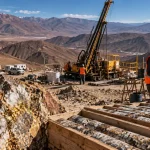
But everyone knows our problem is that we’re having to make a transition from growth led by mining – in particular, by the massive surge in investment in the construction of new mines and natural gas facilities – to growth led by the rest of the economy.
And rough calculations suggest that the “non-mining economy” grew by about 3 per cent over the year to September.
Since we know the economy overall grew by 2.5 per cent, this means the “mining and mining-related economy” must have contracted over the year. This is hardly surprising: mining investment spending is dropping like a stone.
It’s also good news. For a start, it says we’ve made a lot of progress in getting the rest of the economy growing strongly.
But there’s another, arithmetic point. The collapse in mining investment can’t go on forever. Eventually you hit bottom and can’t fall any further. When that happens, the mining sector stops “subtracting from growth”.
And when mining is neither subtracting from growth nor adding to it, the quite-strong growth in the non-mining economy will be all the growth we’ve got – and it, we can hope, will still be growing by 3 per cent a year.
In other words, the economy should speed up as soon as it loses the drag coming from the big contraction in mining investment. And that should happen by about the end of this year.
Budget position a subject of division
Next, have you noticed how popular it’s become to measure the budget’s performance by looking at the change in the level of government spending as a proportion of “nominal” (that is, before adjusting to remove the effect of inflation) GDP?
In principle, it makes sense to compare nominal government spending with the nominal size of the economy. It’s saying that the size of the economy grows for various reasons – inflation, real growth, growth in the population – and it shouldn’t worry us that government spending is growing for the same reasons.
It’s only noteworthy when government spending is growing faster or slower than the economy.
But here’s where it helps to have a feel for arithmetic. When you keep comparing an economic variable to a particular “denominator” (the number that goes on the bottom of the sum) over many years, you’re implicitly assuming that the denominator (nominal GDP, in this case) moves in a reasonably steady, reliable way.
If so, any change in the ratio (the percentage) can be attributed to changes in the “numerator” (the number that goes on the top; in this case, government spending). If the denominator isn’t moving in a stable fashion, then this instability could be contributing to the change in the percentage, making it hard to be sure what’s going on with the numerator.
Trouble is, the resources boom has played havoc with the stability of nominal GDP. Why? Because GDP, being a measure of the nation’s production of goods and services, naturally includes our production of exports.
But we know that the prices we were getting for our main mineral exports – coal and iron ore – shot up to unheard of levels in the early part of the boom, then from mid-2011 began falling back to earth.
To see how this has affected the stability of nominal GDP, consider these comparisons (for which I’m indebted to Michael Blythe, chief economist of the Commonwealth Bank). Over the nine years to 2001-02, it grew at an annual average rate of 6.1 per cent. (This would be inflation of 2.5 per cent plus real growth of about 3.5 per cent.)
We can think of that as nominal GDP’s “normal” rate of growth. But then the prices boom starts and continues for the nine years to 2010-11, during which it grew at a rapid annual average rate of 7.2 per cent.
In the four years to 2014-15, however, the fallback in export prices caused nominal GDP to grow at a pathetic annual rate of 3.4 per cent – just a bit more than half what’s “normal”.
Get the point? The ups and downs of our mineral export prices shouldn’t have any direct effect on the growth in government spending (though the boost to tax collections may have encouraged governments to be more generous on the spending side).
So the resources boom has had the effect of causing the government spending-to-GDP ratio to understate the extent of the growth in spending during the boom years, but now is overstating it.
The Sydney Morning Herald